The World of Software Development Through the Eyes of a VP of Engineering 💾
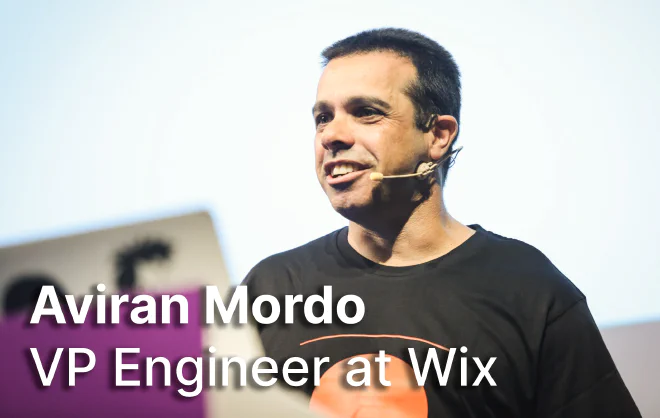
I spoke with Aviran Mordo, VP of Engineering at Wix. Aviran has 25 years of experience, including a variety of management roles. As a senior software engineer, Aviran regularly shares his thoughts online on many topics, including building and maintaining an engineering culture, his personal experience, and more.
Why Do You Have These Conversations? #
Aviran asked me this at the beginning of our conversation. Honestly, I was caught off guard. Since leaving the IDF about six months ago, I’ve learned many lessons. I’ve learned that a good way to learn is to talk to different people in the industry, get to know them, seek advice, and ask questions about relevant topics that interest me. I’ve found that I enjoy it, learn from it, and come away with ideas and motivation to move forward and improve. The goal of this article is to share, so that others can also benefit and get to know the interesting people I’ve met.
Wix #
Wix was founded in Israel in 2006 by four Israelis with the goal of offering a simple software interface that lets anyone build a website quickly and easily, without any prior programming knowledge. The company employs about 5,000 people and is publicly traded in the United States, with a valuation of over $5 billion. It has more than 220 million registered users.
Guilds #
The Guild Approach #
When he joined the company, Aviran noticed a need to preserve its engineering culture as the number of developers grew. This led to a guild-based management approach. Through guilds, teams at Wix are managed in a decentralized way, with each team working independently while collaborating internally. This approach benefits the organization in several ways: flexibility in how people work, creativity, and an emphasis on the importance of collaboration.
Guild Structure #
An Example of the Guild Structure at Wix #
The Four Principles of Guilds #
- Autonomy in making decisions, setting goals, and managing resources.
- Collaboration between teams within a guild to ensure projects succeed.
- Connecting teams from different departments and areas of expertise to encourage discussions from different perspectives.
- Continuous learning through one-on-one mentoring, shared training sessions, and professional workshops.
Let’s take Shai, a user experience developer, as an example to illustrate how guilds at Wix work.
Shai belongs to the Development Guild at Wix. She is currently working on a new product that will help artists showcase and sell their artwork. As part of her work on the product, Shai sets goals and timelines, aiming to make the best use of resources and time.
Shai works with the Design Guild to make sure the product is intuitive to use and looks good. She also works with the Marketing Guild to develop advertising strategies ahead of the product’s release. After receiving user feedback, Shai uses insights from the Data Guild to make the necessary adjustments to the product.

I recommend listening to the podcasts where Aviran has discussed this topic in greater depth: “From Within” and “Making Software”.
Balancing the Intensity of Day-to-Day Work with Employee Mentoring #
After we discussed the importance of guilds and their contribution to the organization, Aviran explained that each guild devotes 20% of its time to its members’ professional and personal development. Let’s take Shai as an example. Alongside her day-to-day work, Shai studies, attends workshops, and acquires new skills. Among other things, this keeps her up to date with technologies on the market, introduces her to best practices, empowers her as an employee, and helps the product succeed. Employees are expected not just to learn independently, but to do so as part of a company culture that encourages sharing. I’ve attended several of the company’s meetups and seen this firsthand. Highly recommended!
How Do You Think AI and No-Code Solutions Will Affect the Field? #
Aviran says he has often been asked whether he thinks natural language processing (NLP) technology will replace developers. The short answer is: no! AI-based engines will not replace developers anytime soon. In his view, they will be highly valuable tools for repetitive day-to-day work, code errors, writing tests, completing code snippets, and more. These engines are not yet at a stage where they can think creatively or “invent” code they haven’t seen before. They don’t know how to handle massive code projects.
In Aviran’s view, no-code solutions combined with AI tools are expected to introduce more people to the world of software development, allowing them to build basic projects without substantial development knowledge. For example, while building a Wix website, users will be able to incorporate code snippets as needed, using an external AI engine and without knowing how to write code.

The Connection Between University Studies and Professional Success #
Do degree holders have an advantage when applying to the company? Aviran divided candidates into two groups:
- Candidates with a degree are not necessarily more successful. Studying contributes to a deeper understanding of various topics. It also helps people learn how to learn.
- Candidates without a degree, who tend to learn independently, focus on learning the practical skills that will deliver substantial value in relatively little time, while theory plays a smaller role. Self-directed learning isn’t for everyone. Even with all the professional information within reach, do we know how to stick with it? How much of our time are we willing to devote to learning?
Elon Musk Recently Announced a “Return to the Office” and an End to Working from Home. What Do You Think About This? #
Aviran believes that employees and managers don’t always fully understand the concept of working from home. In his view, discussions, personal interaction, and hallway conversations are things that cannot be replaced.
You Entered the Industry on Your Own, Without Guidance or a Family Background in the Field. What Qualities Would You Say You Needed to Do That? #
- Passion for the profession - Aviran was one of Israel’s first “computer kids,” with computers around him from the age of 12. Anyone who wants to work in the field needs to love it wholeheartedly.
- Excellence - Striving to do the best possible job. Aviran does not accept unfinished or poor-quality work.
- Willingness and ability - Reaching a goal takes effort. You need to keep learning independently, build a network of connections, attend industry conferences, and more.
What Is Your Advice for People Looking for Work Right Now? #
- Passion - Aviran looks for passion for the field, including in candidates’ personal lives. For example, what do they do after work? Do they continue to develop, learn, and read about the field?
- Achievements - What did you move forward at your previous workplace? It’s a good idea to show projects you’ve completed and talk about your achievements.
- Timing - Sometimes we may be the best fit for a particular position, but it might not be open right now.