Product Management at Forter
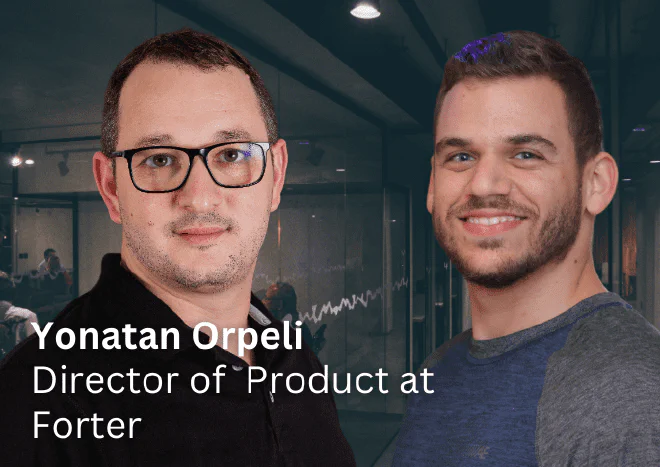
Yonatan Orpeli, Director of Product at Forter, shares his experience in the field, his professional perspective, and stories from throughout his career in a personal interview.
About Forter #
Forter, founded in 2013, focuses on preventing fraud in e-commerce (fraud detection). We can sum up Forter’s goal with a question: can we trust the person on the other side of the transaction? The idea is to understand and analyze the transaction’s characteristics, even if they seem “normal” at first glance, and raise a “red flag” when necessary.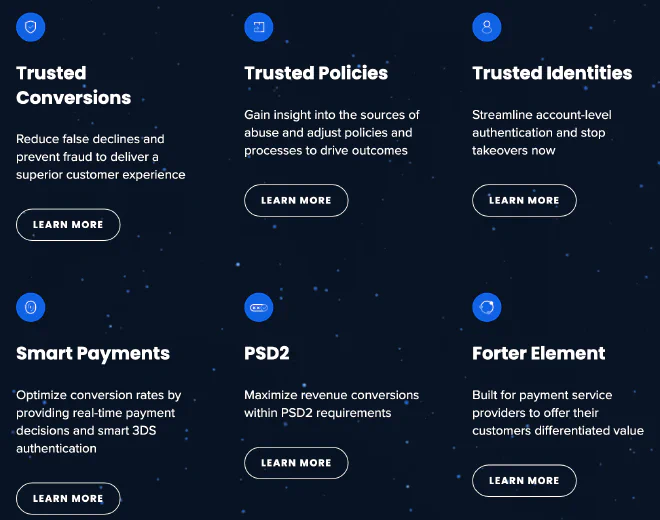
How Did You Become a Product Manager? #
Yonatan stumbled into product management. After his military service, he worked at a startup with friends and later studied for a law degree. Although he enjoyed his legal studies, he decided to change direction while still pursuing his degree.
Yonatan says that when he entered product management, awareness of the field was limited. There were no professional standards or support, and it wasn’t entirely clear what a product manager was responsible for or what was expected of them. This contrasts with today, when the field is growing rapidly, with many excellent product managers, supportive communities, and professional standards.
Is a Product Manager the CEO of the Product? #

Yonatan says that a product manager must be curious and creative, and always keep learning. Creativity, thinking outside the box, and taking a cross-functional view of the organization are what guide him.
Yonatan discussed the article “Good Product Manager/Bad Product Manager”:
- A good product manager is confident in their actions, takes responsibility, focuses on the product and its customers, anticipates product issues and flaws, and communicates with everyone effectively and pleasantly.
- A bad product manager is full of excuses, focuses on the competition, struggles to define and deliver products, and does not prioritize addressing product issues and flaws.
This article sparked a debate that continues to this day: is the product manager the CEO of the product?
Yonatan says the role offers opportunities to be creative and think beyond the obvious. The satisfaction that follows a success is almost unimaginable. Alongside that professional satisfaction come challenges and a sense of being a “lone wolf.” A product manager is responsible for gathering input from many people, such as stakeholders within the organization and customers, and putting together a prioritized work plan. The role is often demanding and stressful, and it isn’t for everyone.
What Saying Has Guided You Throughout Your Career? #
Yonatan says it is important for anyone who wants to pursue a career in product management to have a mentor. He, too, had a mentor early in his career. One of his mentors told him:
You can’t accommodate everyone at once.
As product managers, we want to be involved in every area of the organization. However, it is important for a product manager to stay focused on the need and the product. We have a goal to achieve, and there will always be something to do. The art lies in knowing how to balance tasks and the desire to make changes with the limited time we have.
Along the way, we will encounter problems and opportunities that we will want to take ownership of and address. We won’t always be able to do so, and we will have to leave them to colleagues elsewhere in the organization. We need to know when to let go.
Do You Consult with Peers at Other Companies? #
Every company has something unique we can learn from. Yonatan regularly speaks with peers, not necessarily based on their position in the organizational hierarchy. Through these conversations, he encounters different methods and ways of thinking, and learns from others.
In general, Yonatan says that since he started working in the field, there has been significant progress in establishing standards, defining goals, working methods, approaches to product-market fit, research, and more.
How Do You Focus on the User’s Need Rather Than the Problem? #

A need stems from a problem users have. That is why it is important to first focus on the need, validate it, and plan ahead, and only then implement a solution. We must not “jump” straight to a solution. Let’s ask ourselves: if the solution we implemented fails, does the problem still exist? In most cases, the answer is yes, which is why it is important to focus on the need and not fall in love with our solution.
Are You Sometimes Surprised by User Research? #
Yonatan says that in the past, they conducted user research without a specific research question or a theory they wanted to confirm. During the research, they discovered a problem many users were encountering: the system logged them out after 15 minutes of inactivity. Naturally, this discovery led to a relatively simple fix and a great deal of user satisfaction.
Through this story, Yonatan makes the point that we don’t always want to constrain our users with narrowly focused surveys. There may be an amazing solution right under our noses that could bring users tremendous value.
What Do You Think About Product Roadmaps? #
Many product managers argue that there is no need for a roadmap and that they can prioritize tasks and needs in real time. Yonatan disagrees with this position, because planning ahead is very important for an organization and for achieving its business goals.
Why do we need one?
- It is a great communication tool if you know how to use it properly. For example, you can show different teams within the organization which problems you are solving and when new product capabilities (features) will be developed. This helps ensure that those teams are informed and have a say, rather than feeling ignored.
- It provides an outward-facing view from a business perspective.
Why don’t we need one?
- We do need one, but we also need to be careful, because sometimes the roadmap tends to become the center of all activity and discussion.
We need to know how to use a product roadmap as a communication tool, while recognizing that it isn’t the be-all and end-all.
How Do We Express Our Passion Despite the Demands of Work and Our Personal Lives? #
Like everyone else, Yonatan says he has bad days too. On those days, we need to remember why we chose our profession, our studies, and our workplace. It is important to put ourselves and our families first, and to make sure we go to bed happy and satisfied with what we do.
Harvard Business Review, (2011) Why Most Product Launches Fail ↩︎
Journal of Product Innovation & Management, (2013) “Myths About New Product Failure Rates” ↩︎