Product Management Through the Eyes of a VP of Product 📚
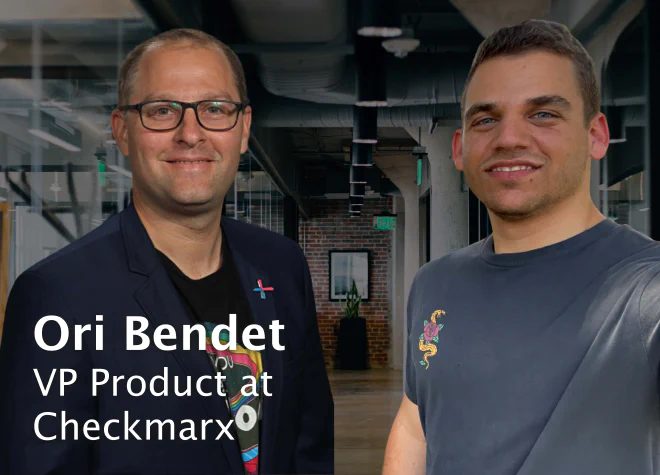
I interviewed Ori Bendet, VP of Product Management at Checkmarx. We discussed his perspective on the product manager’s role, the market downturn, possible reasons products fail, the challenges of combining professional and personal life, and a variety of other topics.
Checkmarx #
The company was founded in 2006 by Maty Siman and Emmanuel Benzaquen to support developers who need to write secure code throughout the development lifecycle: analysis, open source, API development, and various supply chain processes. The company was acquired in early 2020 by the American firm Hellman & Friedman for more than a billion dollars. Today, it is a global company with development centers in Israel and Portugal and employees around the world. Its headquarters are in Ramat Gan, with hundreds of employees.

As a senior executive, what is your management philosophy? #
Every manager, regardless of seniority, needs to develop delegation into an art. We should ask ourselves, “Am I the lowest level that should be handling this task?” We need to remember that we all have tasks to do, and it is important to work according to priorities.
Ori follows two rules of thumb:
- Peace of mind - Give your higher-ups peace of mind. Understand what matters to them and how they like to receive updates. At the same time, as managers, we need to remember to give our own employees peace of mind too.
- Planning ahead - Always be one step ahead. Stay on top of things rather than waiting for reminders.
"A good VP gets the job done. A great VP takes a chunk of your worries away"
Product managers “conduct” an orchestra of developers, marketing, HR, and so on. What do you think? #

Ori starts by saying that this analogy resonates with him, but adds a caveat: whether a product manager can “conduct” broadly across the organization depends on the company’s maturity and its employees’ openness and cooperation. A product manager needs to remember that they are not the company’s CEO: they manage only the product, not the people, so they need the ability to get people on board and a personality suited to the role.
In general, the tendency in Israel is to adopt the view that most of a product manager’s work involves working closely with developers. Product managers need to be given full end-to-end responsibility for the product they are working on. This starts with the initial “sketch” and continues through the final release to production, involving everyone along the way.
Have you made a pivot recently that turned out to be a mistake? #
Ori agrees with the idea that you must not fall in love with products or features. The company’s goal is a business goal. The product’s purpose is to achieve that goal. Sometimes the goal changes, and the product no longer serves the company’s rationale; other times, the product does not work well.
For example, Ori shared that he worked on a feature a few years ago. Although all the relevant checks and research had been carried out before development, in practice it did not match the reality of the market. Ori says that a product manager who “falls in love” with the problem rather than the solution will be the best kind of product manager.
Getting People on Board #
Ori says that in today’s reality (working remotely, sometimes from different countries), the product manager must actively work to create a team atmosphere. This requires scheduling weekly meetings, keeping team members updated, and giving employees space to consult with one another. It is important to give employees the feeling that they really are part of something bigger.
Not every team member will always be as happy as we would like. Companies change, the market changes, and employees change. We are no longer in an era when people work at the same company for their entire lives. The world moves faster, positions open and close more frequently, and the market is constantly shifting. According to Ori, the most important question employees will ask themselves is “Does where I am now serve my goal?”
How is the market downturn affecting you? #
Ori suggests looking at the downturn as an opportunity. First, from a product management perspective, abundance distorted prioritization. It led to a situation in which companies developed products that did not reflect their customers’ needs or the company’s vision. Second, product managers’ instincts become sharper when a wrong decision can have a greater impact than before. Ori is confident that once the economy returns to growth, companies will come back with sharper instincts and a stronger focus on their vision.
35% of startups fail because there is no market need. What do you think? #
Ori says that most products fail early on, even at giants like Google and Apple, regardless of strategy or market need. The reason is that the product was not defined correctly. Before development begins, product managers need to ask themselves: does the product solve a problem that people are willing to pay to solve?
Combining Professional and Personal Life #

In Ori’s view, we have moved from work-life balance to work-life harmony. The flexibility of the way we work today allows us to combine the two in ways that were not possible before. Every employee needs to define their own boundaries for work, recognizing that saying “no” is difficult. Ori shared a personal example: one of his regrets was taking a business trip over a weekend. Since then, he has set himself a rule that he will not travel over weekends or holidays again.
Ori concludes by saying that our careers are our own. We decide how to manage them and define the goals we want to reach. It is important to ask “What is our dream?” and keep pushing ourselves along the way until we achieve it.