The History of Payments 💵
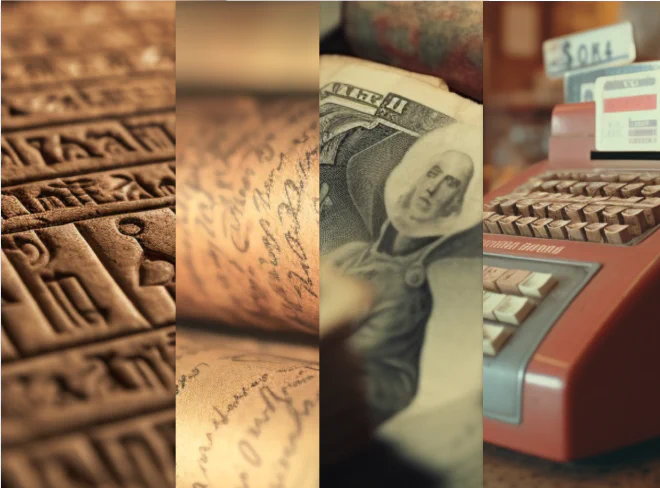
Throughout history, people have looked for ways to make payments more efficient. At first, they paid with goods such as livestock. Later, they realized they needed a better way to manage trade and switched to coins made of precious metals such as gold and silver. Next, they began representing monetary value using leather, and later, paper notes. Today, most of us pay for services using credit and cash. Will we keep doing things this way?
Payments in the Early Bronze Age ⚱️ #
The word “credit” is synonymous with authorization: authorization for a financial charge. This system of authorizations has been with us for at least 5,000 years, originating with our neighbors in Mesopotamia. Back then, when people traded, they would inscribe a record of the transaction on a clay tablet (Clay tablet).
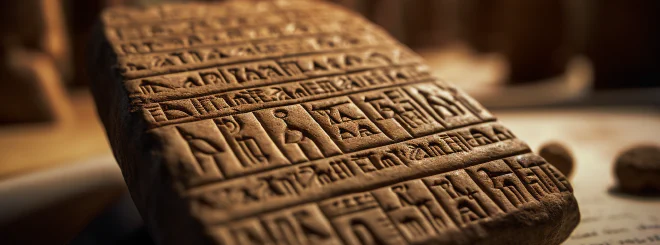
About three thousand years later, the Romans used the IOU method for payments. I Owe You served as a way for two parties to mutually acknowledge a debt, with one party owing money or goods to the other. Like the clay tablet, an IOU allowed merchants to conduct transactions without needing coins. The lender committed to paying the creditor on a specified date.

Payments in the Middle Ages 🏰 #
During the Middle Ages in Europe, people began using bills of exchange (Bills of Exchange) for international payments. Bills of exchange remained in use until recently, and even appear in the State of Israel’s Bills of Exchange Ordinance, first published in 1933:
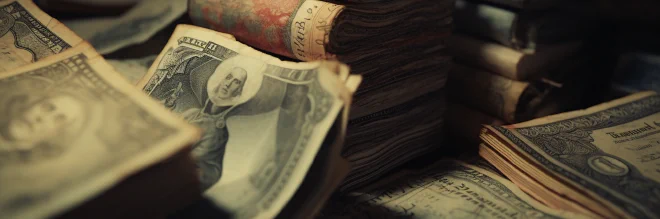
The banking system first took shape in the 14th century. For the first time, managing, lending, and trading money became convenient and accessible. Later, in the 17th century, people began using banknotes (Banknotes). These notes were backed by precious-metal coins stored in banks, which maintained the value of the notes.
Payments in the 19th Century 🚂 #
At the end of the 19th century, the Retail Credit Company (now Equifax) was founded. The company created a “data lake” of information collected from local stores, lenders, databases, and other sources. Using this data lake, RCC calculated credit scores, Credit Score (sound familiar?), for the first time, based on financial assessments and behavior. Credit score reports allowed lenders to track customers’ financial conduct and reliability, helping them manage lending risks more intelligently. RCC sold these credit scores to lenders and financial businesses.
Payments in the 20th Century 📺 #
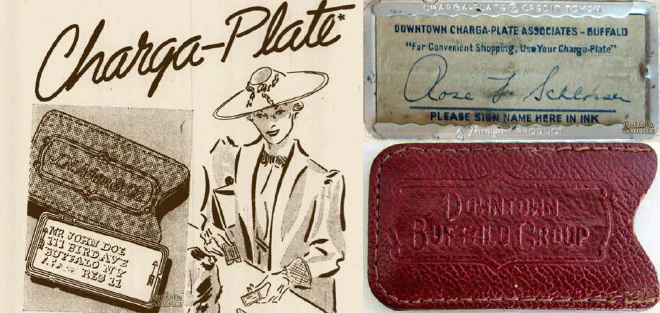
At the beginning of the 20th century, credit cards entered the picture in the form of a metal plate called the Charga-plate. The metal plates were embossed with the customer’s details, address, and bank account number. When making a purchase at a business, the plate was imprinted onto the business’s sales slip, and the transaction details and the customer’s signature were added. In practice, the customer did not pay the store directly at the time of the transaction. Businesses sent the transaction slips to banks, which settled customers’ charges by setting a monthly bill based on their transactions. Customers were asked to pay by a specified date to avoid fees and penalties.
The invention of the internet in the 1970s made it possible to conduct credit transactions over a cross-border payment network. The metal plate became a digital credit card, linked to a bank account, making it more convenient and faster to pay for transactions.
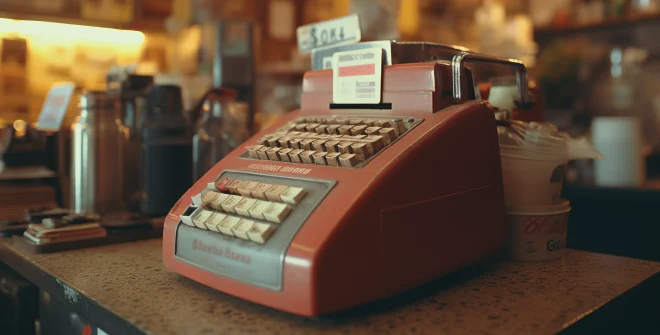
Another important development occurred in 1971, when President Richard Nixon decided to stop backing the dollar with precious metals, as had been the practice since the 17th century. As a result of this decision, the United States’ currency became a fiat currency (fiat). From that decision to this day, the dollar’s value has been backed by a national consensus about its worth.
Needs Through the Years 💡 #
Payment methods have evolved significantly over the past five thousand years. They have consistently addressed the same needs. I’ve distilled these needs into categories relating to capital and payments, along with everyday examples to illustrate them:
- Transferring value = The ability to transfer purchasing power from one place or time to another (for example, buying something online from abroad).
- Reducing risk = Concerns about fraud during transactions call for a payment platform that allows a transaction only if both parties fulfill their obligations (for example, Paypal).
- Deferred payments = A payment arrangement that allows payment at a later date through a loan due on a specified date (for example, credit cards).
These needs are reflected throughout history. For example, with IOUs, the main need was reducing risk; with the metal plate, it was deferred payments; and with banknotes, it was transferring value.
In the next post, I’ll present the 21st century from my perspective. I hope you’ve learned something new about the evolution of payments 😀